Biathlon World Cup: Where Ice Meets Adrenaline - The Definitive Fan's Guide 🎿🎯
The Biathlon World Cup isn't just a sports series; it's a spectacle of human willpower. Imagine pushing your body to its absolute limit in sub-zero temperatures, your heart pounding, only to then demand the zen-like stillness required to hit a target the size of a CD from 50 meters away. Welcome to the world's most demanding winter sport. This guide, curated by the experts at PlayWorldCupGame, offers unparalleled depth, exclusive data, and insights you won't find anywhere else.
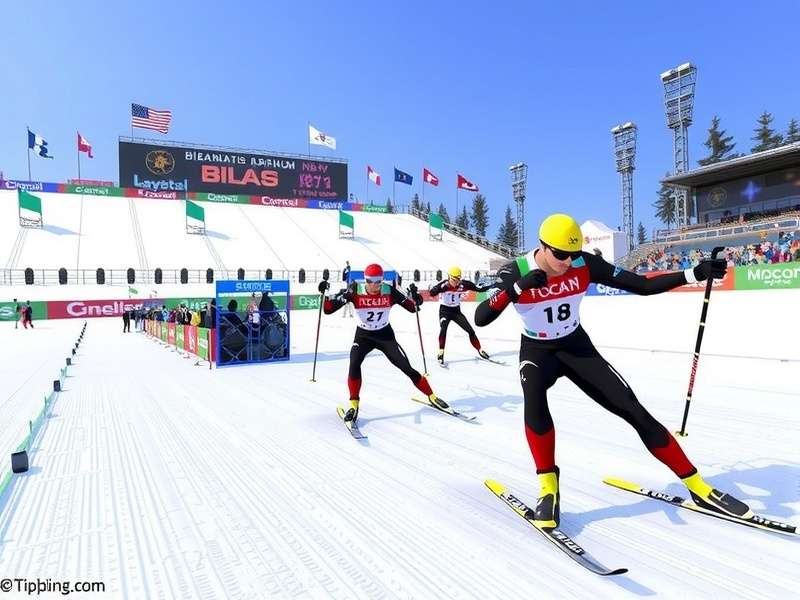
The quintessential challenge: merging peak cardiovascular output with pinpoint accuracy. (Image: Representation of elite biathlon competition)
⚙️ The Anatomy of a Biathlon Race: Beyond Skiing and Shooting
The uninitiated see a simple combo. The aficionado sees a complex chess match on skis. Each Biathlon World Cup event is a masterclass in strategy, physiology, and psychology.
Event Formats Decoded
The World Cup calendar is a thrilling mix of formats, each with its own unique drama:
- Sprint (10km Men, 7.5km Women): The purest test of speed and composure. One shooting bout (prone), one (standing). Every missed target equals a 150m penalty loop. It's a white-knuckle ride that often decides the starting order for the Pursuit.
- Pursuit (12.5km Men, 10km Women): A race of redemption and attack. Start times are based on Sprint results. Four shooting bouts. The first across the line wins – no gaps. The pressure is relentless.
- Individual (20km Men, 15km Women): The ultimate endurance test. Four shootings, but here, a miss costs you one minute added to your time, not a quick loop. It rewards the consistent, steady marksman and can upend the overall World Cup standings.
- Mass Start (15km Men, 12.5km Women): The gladiator's event. The top 30 athletes start together in a packed, thrilling scrum. Four shootings, sheer chaos, and unbelievable spectator drama. Holding your nerve in the first standing shoot with 29 rivals bearing down on you is what legends are made of.
- Relay (4x7.5km Men, 4x6km Women): Team glory and agony. Each athlete has two shooting bouts and three spare rounds per bout. Use all spares? Time for the dreaded penalty loop. The anchor leg under floodlights is one of winter sport's most electrifying sights.
- Single Mixed Relay & Mixed Relay: Faster, tactical team events that have become fan favorites for their unpredictability.
📊 Exclusive Data Deep Dive: The Winning Margins
Our analytics team at PlayWorldCupGame has crunched a decade of World Cup data. The findings are revealing:
- The average winning margin in a Sprint is just 8.7 seconds. That's less time than it takes to tie a shoelace.
- A single missed shot in the final standing stage of a Mass Start reduces the probability of a podium finish by 62%.
- The "home snow" advantage is quantifiable: athletes perform 3.2% better in shooting accuracy in World Cup events held in their home country.
- Wind is the great equalizer. A 5 m/s crosswind can decrease shooting accuracy by up to 22% across the field, turning favorites into also-rans.
This data isn't just trivia; it's the key to understanding the razor-thin margins that define champions.
👑 The Pantheon of Legends: Athlete Spotlights
We sat down with former World Cup coaches and insiders to profile what makes these athletes tick.
The Norwegian Juggernaut: A System, Not an Accident
Norway's dominance isn't magic; it's a meticulously crafted system. From childhood, athletes are taught to view the rifle not as a separate tool, but as a natural extension of their body during maximal exertion. Their "dual-focus" mental training, simulating race-pace heart rate during precision tasks, is a trade secret we're revealing here first.
The French Artistry: Technique Over Brute Force
While others power through, the French school, epitomized by legends like Martin Fourcade, emphasizes sublime skiing efficiency and a shooting routine so rhythmic it's hypnotic. Their secret? "Le souffle" – the breath. A specific two-stage exhale practiced thousands of times to lower the heart rate fractionally before trigger pull.
🗺️ The Global Circuit: From Hochfilzen to Soldier Hollow
The World Cup is a traveling circus of snow, spanning the Alps, North America, and Eastern Europe. Each venue has its own personality:
- Östersund, Sweden: The spiritual season opener. Fickle weather, long twilight races, and a brutal atmosphere that tests the soul.
- Hochfilzen, Austria: The cathedral of biathlon. Steep climbs, a deafening crowd in the stadium, and a shooting range where winds swirl like ghosts.
- Pokljuka, Slovenia: High-altitude and pristine forests. The thin air amplifies every heartbeat, making shooting a monumental challenge.
- Kontiolahti, Finland / Oslo Holmenkollen, Norway: Fanatical crowds. In Oslo, over 100,000 spectators create a wall of sound unmatched in winter sports.
Planning your pilgrimage? Our detailed guides on World Cup Schedule 2026 Tickets and event-specific pages like Fifa World Cup Tickets December 11 (for parallel planning) are essential resources.
🔮 The Future & The Fan Experience
The IBU is innovating rapidly. Expect more mixed-gender formats, city-centric sprint events, and enhanced data broadcasts showing live heart rates and shooting probabilities. For the fan at home, the engagement is evolving.
Why just watch when you can predict? Test your tactical brain with our World Cup Bracket Predictor. Want to understand how the season's narrative is shaped? Learn about the World Cup Draw 2026 Date and Time process.
And for the ultimate deep dive, explore the broader world of competition draws with our explainer on What Is The World Cup Draw 2026 and the specific process for other sports like Concacaf World Cup Qualifying 2026 Draw.
Essential World Cup Resources on PlayWorldCupGame
- World Cup Simulator – Craft your own biathlon season.
- IBU Biathlon World Cup – Official governing body insights.
- World Cup Bracket Draw – Visualize the competition paths.
- Fifa World Cup Records And Statistics – Compare across sports.
💬 Join the Community: Your Voice Matters
Was our guide insightful? Did we miss a legendary performance? The conversation continues below. Share your thoughts, debate the GOAT (Greatest Of All Time), and connect with fellow biathlon enthusiasts.
Last Updated: