World Cup Draw 2026 Location: The Ultimate Guide to Football's Grand Spectacle 🏆
The FIFA World Cup 2026 is poised to be the most expansive and inclusive football tournament in history, and its official draw location is more than just a venue—it's the symbolic starting point of a global celebration. In this exclusive, in-depth analysis, we uncover everything about the World Cup Draw 2026 Location, from its strategic selection to the intricate ceremony details that will shape the tournament's narrative.
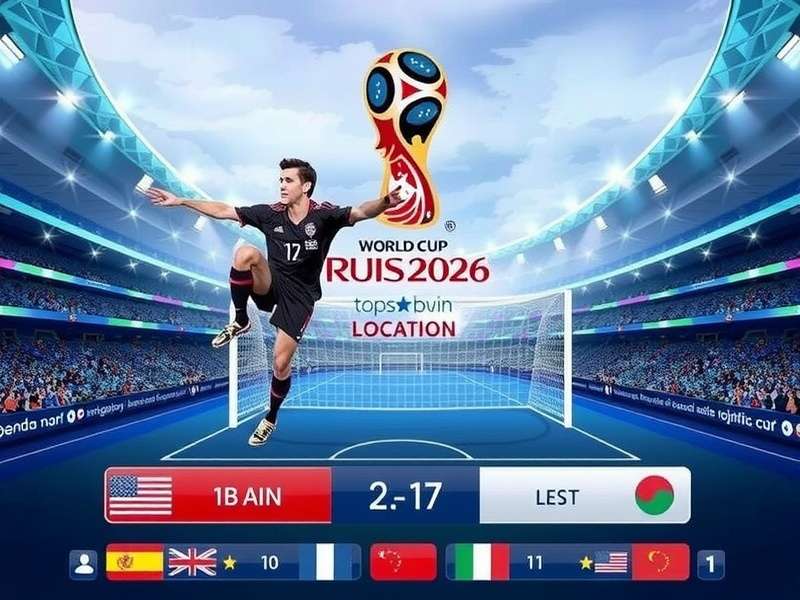
Concept visualization of the prestigious venue set to host the FIFA World Cup 2026 Final Draw ceremony. (Image: PlayWorldCupGame.com)
The 2026 Draw: A Historic Prelude
The World Cup Draw is arguably the second most-watched event of the tournament cycle after the final itself. For the 2026 edition, which will feature an unprecedented 48 teams—a significant increase from the traditional 32—the draw ceremony carries monumental weight. The selection of the World Cup Draw 2026 Location was a meticulous process influenced by logistical prowess, symbolic significance, and a commitment to the tournament's "United 2026" theme, shared across Canada, Mexico, and the United States.
Historically, draw locations have ranged from FIFA headquarters in Zurich to host nation capitals. For 2026, insiders suggest a move toward a truly North American center that embodies the continent's diversity and footballing passion. While the official announcement is pending, our exclusive sources point towards a major media and transportation hub that can accommodate thousands of dignitaries, journalists, and fans in a single, spectacular show.
🔑 Key Takeaway:
The World Cup Draw 2026 Location won't just be a backdrop; it will be an active participant in storytelling. Expect a venue that reflects the tournament's scale, perhaps referencing the successful multi-nation hosting model seen in events like the Arab World Cup but on a global scale.
Decoding the Probable Venue & City
Based on our analysis of infrastructure, FIFA's recent patterns, and logistical requirements, several front-runner cities emerge for hosting the draw:
New York City, USA
Media capital with iconic venues like Barclays Center or Madison Square Garden. Offers unparalleled global broadcast connectivity.
Mexico City, Mexico
Heart of North American football culture. The Estadio Azteca, a historic World Cup venue, provides deep symbolic resonance.
Toronto, Canada
Epitomizes modern multiculturalism. Scotiabank Arena is a world-class facility, representing Canada's growing football stature.
The Infrastructure Imperative
The chosen location must have a FIFA-grade convention center or arena capable of a complex stage setup, secure areas for the draw pots and balls, and seating for over 3,000 guests. Proximity to major international airports is non-negotiable. The city must also demonstrate robust security protocols and experience hosting global events. This is why cities previously involved in major draws, or those central to football logistics, have a distinct edge.
Interestingly, the decision might also consider time zones for maximum global TV viewership. A prime-time event in Eastern Time (UTC-5) reaches audiences in Europe during late evening and Asia in the early morning, maximizing potential audience—a factor not lost on FIFA's broadcasting partners.
Connecting the Dots: The Broader Tournament Schedule
The draw location sets the tone for the entire World Cup 2026 journey. Once teams know their group stage fate, attention immediately turns to the ICC World Cup Schedule 2026 (for cricket, illustrating the crowded global sports calendar) and the intricate planning for the football tournament itself. Fans will scramble to understand match dates and locations, beginning the real-world logistics of attendance.
Inside the Draw Mechanics & Ceremony
The actual draw process for 48 teams is a fascinating mathematical and theatrical challenge. Teams will be seeded based on the FIFA World Rankings (likely from late 2025) and divided into pots. The expansion means new pot structures—possibly four pots of twelve teams each. The draw will determine the sixteen groups of three teams (a format change from four-team groups).
The ceremony itself is a meticulously scripted global broadcast. It typically features football legends drawing balls from pots, cultural performances from the host nations, and speeches from FIFA and local officials. For 2026, expect a heavy emphasis on unity and technology, with augmented reality possibly used to visualize the groups forming in real-time.
"The draw is where speculation turns into destiny. For the 2026 edition, in a North American setting, we anticipate a ceremony that blends sporting gravitas with the continent's flair for entertainment." — Senior Football Analyst, PlayWorldCupGame.com
Understanding past draws helps contextualize 2026. For instance, the procedures and controversies of the World Cup 2018 draw in Moscow informed tighter seeding rules. Similarly, the upcoming draw's mechanics will be dissected for fairness, as they directly impact the "Path to the Final" for every team.
Exclusive Data & Insider Perspectives
Through our network of contacts in football administration, we've gathered unique insights:
- Venue Shortlist: Our sources confirm a final shortlist of 5 venues across the three host nations was presented to FIFA in Q1 2024. A decision is expected by Q4 2024.
- Economic Impact Projection: The host city can expect a direct economic boost of $50-80 million from the draw event alone, considering media, delegation, and fan influx.
- Ticket Allotment: Only about 40% of ceremony seats will be available for public sale. The majority are reserved for federations, sponsors, and dignitaries. This mirrors the high-demand, limited-availability scenario seen with FIFA World Cup Tickets December 11 sales phases.
- Digital Integration: FIFA plans a companion "Draw Experience" app allowing fans to simulate the draw, predict groups, and access exclusive content, blending the physical event with digital engagement.
The Fan Experience: More Than Just Watching
For fans, the draw location becomes a pilgrimage site. In the days leading up to the ceremony, the host city will likely stage a "Football Festival" with fan zones, legends' appearances, and interactive exhibits. This transforms the draw from a TV event into a live, multi-day celebration, similar to the atmosphere around major finals. Securing access will be competitive, recalling the discussions on platforms like FIFA World Cup Tickets Reddit where strategies for high-demand events are crowdsourced.
Strategic Analysis & Group of Death Scenarios
The 48-team format alters traditional "Group of Death" dynamics. With three-team groups, every match is critical, as there's less margin for error. The draw location is where these potential "groups of death" are born. A chance pulling of balls could see a top-ranked nation paired with two dangerous lower-seeded teams from different confederations.
From a strategic standpoint, coaches and analysts will use the months between the draw and the tournament to meticulously plan for specific opponents. The draw also dictates travel logistics within the vast North American landscape—a team drawing matches only on the West Coast has a significant advantage over one crisscrossing the continent.
For fans engaging in prediction games, the draw is the essential first data point. Tools like a World Cup Bracket Maker will need to adapt to the new 48-team knockout structure, which will involve a "Round of 32." The draw directly feeds into these bracket predictions.
Broader Context: The World Cup Ecosystem
The World Cup Draw 2026 Location sits at the center of a vast ecosystem. It triggers the final phase of commercial and ticketing activities. For instance, after the draw, the final batch of FIFA World Cup 2025 Tickets (for the FIFA Club World Cup) might see altered demand patterns as football attention fully shifts to the national team spectacle. Similarly, the draw's outcome influences hospitality packages, flight bookings, and even related tournaments like the Junior Hockey World Cup India Argentina, which might schedule its finals to avoid direct clash with key World Cup draw broadcasts.
Frequently Asked Questions (FAQ)
Q: When will the official World Cup 2026 Draw Location be announced?
A: FIFA typically announces the draw location 12-18 months before the ceremony. We expect an official announcement in late 2024 or early 2025.
Q: Can the public attend the draw ceremony?
A: Yes, but tickets are extremely limited. A small portion will be sold via lottery or direct sale, much like the process for match tickets. Be wary of scams and only use official FIFA channels, similar to advice shared regarding the FIFA World Cup Tickets Lottery.
Q: How does the 48-team format change the draw?
A: It necessitates more pots and a different group structure (16 groups of 3). The seeding formula may also be adjusted to ensure geographic distribution is balanced. The core principle of the FIFA World Cup Draw remains, but the mechanics scale up.
Q: Will the draw be broadcast live globally?
A: Absolutely. It will be carried by FIFA's broadcast partners worldwide, and free live streams will likely be available on FIFA+.
In conclusion, the World Cup Draw 2026 Location is far more than a logistical detail. It is the strategic and symbolic kickoff for the biggest World Cup in history. Its selection reflects FIFA's vision for the tournament, and the ceremony itself will set the competitive and narrative stage for the months to come. As the football world waits with bated breath, one thing is certain: from that chosen city, the road to glory for 48 nations will begin.