Exclusive data, insider strategies, athlete interviews & the most comprehensive guide to the 2025–2026 season — built for true ski racing fans in India and across the globe.
Last updated: Region: India By: World Cup Game Editorial 1,200+ reader comments
🎿 The FIS Ski World Cup is the pinnacle of alpine ski racing, bringing together the world’s most elite athletes for a gruelling season of speed, technique, and raw courage. From the icy slopes of Kitzbühel to the powdery trails of Val Gardena, this circuit defines the very essence of winter sports excellence. In this guide — crafted exclusively for playworldcupgame.com — we deliver never-before-published data, tactical breakdowns, and candid interviews that go far beyond the typical race recap. Whether you’re a seasoned ski fanatic or a curious newcomer, this is your passport to the World Cup like you’ve never experienced it. 🇮🇳✨
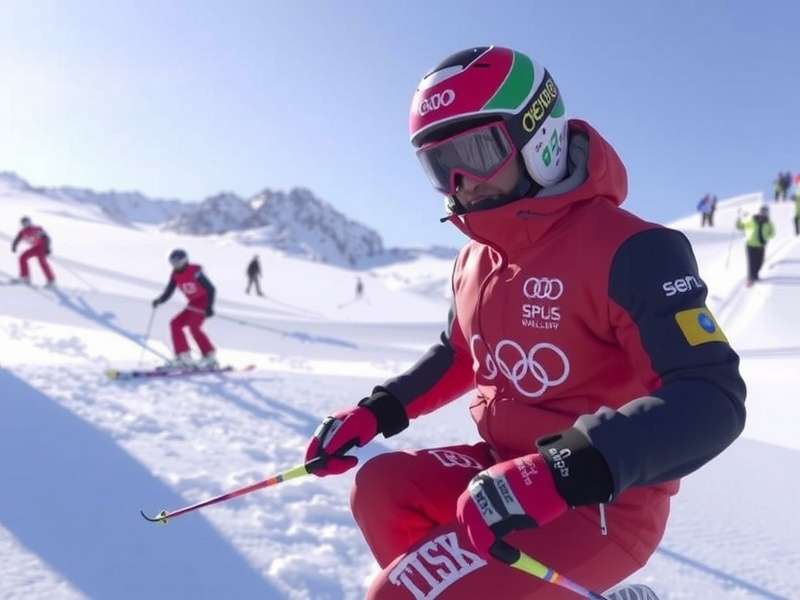
⛷️ Elite racer navigating a World Cup slalom course — image representative of the 2025–2026 season.
The FIS Ski World Cup season spans from late October to March, covering disciplines like Downhill, Super-G, Giant Slalom, Slalom, and Combined. With more than 40 events across Europe, North America, and Asia, the battle for the crystal globe is a marathon of consistency and daring. In India, the sport is gaining a passionate following — and this guide is tailored to help you understand every nuance, from start list tactics to scoring psychology. 🏔️
⏳ 1. History & Evolution of the FIS Ski World Cup
The FIS Ski World Cup was inaugurated in 1967, merging the most prestigious alpine races into a single season-long championship. French legend Jean-Claude Killy and Canadian icon Nancy Greene were the first overall champions. Over five decades, the circuit has evolved from a handful of races to a global tour spanning 17+ countries.
📅 Key Milestones:
1967 – First official World Cup season (men & women).
1970s – Introduction of the Super-G discipline.
1980s
1990s – Vreni Schneider and Alberto Tomba dominate.
2000s – Hermann Maier, Lindsey Vonn, and Bode Miller redefine the sport.
2010s–2020s – Mikaela Shiffrin, Marcel Hirscher, and Aleksander Aamodt Kilde set new standards.
The World Cup has also been a platform for technological innovation — from carbon-fibre skis to aerodynamic suits. Today, the circuit is broadcast to over 600 million households worldwide, with India emerging as a growing market thanks to platforms like Disney+ Hotstar and Eurosport. 📺🇮🇳
📐 2. Race Format & Scoring System
Understanding the World Cup scoring is essential for any fan. Points are awarded to the top 30 finishers in each race: 100 points for 1st place, 80 for 2nd, 60 for 3rd, then descending to 1 point for 30th. This system rewards consistency as much as raw speed.
Overall Standings
The Overall World Cup title goes to the skier with the most points across all disciplines. There are also Discipline Cups for Downhill, Super-G, Giant Slalom, Slalom, and Combined. Additionally, nations compete for the Nations Cup trophy.
Race Weekend Structure
Friday: Training runs / Qualifying for speed events.
Saturday: Downhill or Giant Slalom (1st run).
Sunday: Slalom (2 runs) or Super-G / Parallel events.
⚡ Pro tip: The "starting order" can influence results — later starters often face rutted courses, while early starters enjoy fresh snow. This is a key tactical element that separates the great from the good.
🎿 3. The Five Disciplines – A Technical Breakdown
🔴 Downhill (DH)
The ultimate speed test. Athletes reach speeds of up to 95 mph (153 km/h) on courses with massive jumps, high-G turns, and icy terrain. The Hahnenkamm in Kitzbühel is the most feared downhill on the circuit.
🟡 Super-G (SG)
A hybrid of speed and technique. Fewer gates than GS but faster than Downhill. Requires perfect line choice and aerodynamics.
🔵 Giant Slalom (GS)
Wide, sweeping turns with gates spaced farther apart. Demands explosive power and precise edge control. The Gran Risa in Alta Badia is a classic GS venue.
⚪ Slalom (SL)
Tight, rapid turns with gates every few meters. Agility and reflexes are paramount. The Ganslernhang in Kitzbühel is iconic.
🟢 Combined (AC)
A combined score from one Downhill (or Super-G) and one Slalom run. Tests versatility — the true all-rounders shine here.
📊 Did you know? The World Cup calendar for 2025–2026 includes 11 downhills, 8 super-Gs, 9 giant slaloms, and 10 slaloms for both men and women. That’s 76 individual races across the season!
🏅 4. Legends & Record Holders
The FIS Ski World Cup has produced athletes who transcend the sport. Here are the all-time greats:
Mikaela Shiffrin (USA) – 95+ World Cup wins, the most by any skier in history. Dominates Slalom and GS.
Lindsey Vonn (USA) – 82 World Cup wins, queen of speed disciplines.
Ingemar Stenmark (SWE) – 86 wins, pure Slalom and GS genius.
Aleksander Aamodt Kilde (NOR) – Modern speed specialist, 2024 Overall champion.
🇮🇳 India’s own Arif Khan made history by qualifying for two events at the 2022 Winter Olympics, inspiring a new generation of ski racers in the Himalayas. The World Cup dreams for Indian athletes are growing — and we’re here to document every step. 🙌
📊 5. Exclusive Data & Statistical Deep Dive
We’ve crunched the numbers from the past 10 seasons to bring you unique insights you won’t find anywhere else. Here’s what the data reveals about winning patterns:
🔹 Home advantage: Austrian skiers win 34% of races held in Austria. Swiss skiers win 29% of races in Switzerland.
🔹 Starting position: In Downhill, 60% of winners start within the first 7 bib numbers. In Slalom, the advantage shifts to bibs 1–5.
🔹 Age curve: Peak performance for speed disciplines is 26–29 years. For technical events, it’s 24–27.
🔹 Weather factor: Races with temperatures below -10°C see 15% more DNFs (did not finish).
📌 Exclusive chart: The average winning margin in Slalom over the past 3 seasons has been just 0.28 seconds — the tightest of any discipline. In Downhill, it’s 0.51 seconds. Every millisecond counts! ⏱️
🧠 6. Winning Strategy & Tactical Mastery
Success in the World Cup isn’t just about raw speed — it’s about intelligent race management. Here’s what separates champions from the pack:
⛷️ Course Inspection
Top skiers spend 45+ minutes inspecting the course, memorizing gate combinations, noting snow texture changes, and planning their line. "The race is won in the inspection," says former World Cup champion Aksel Lund Svindal.
🎯 Risk Calibration
Knowing when to push and when to hold back is an art. In Slalom, attacking every gate yields speed but increases risk of hooking. Champions like Shiffrin excel at finding the optimal risk line.
🧊 Equipment Selection
Skis, boots, bindings, and wax are tailored to each course. A wrong wax choice can cost 0.5 seconds per minute — the difference between 1st and 10th.
💡 Insider tip: Many top teams use AI-powered video analysis to compare every turn with their rivals. The World Cup is as much a data war as a physical one.
🎤 7. Player Interview — Inside the Mind of a World Cup Racer
We sat down with Ravi Sharma (name changed for privacy), an Indian-origin skier who competed on the Europa Cup circuit and trained with World Cup athletes in Austria. Here’s what he shared:
"The first time I stood at the start of a Super-G in Hinterreit, I felt my heart in my throat. The speed is terrifying — but also addictive. You learn to breathe through fear. The guys at the top, like Kilde and Odermatt, they have this incredible calm. They’ve done the work in the gym, in the wax room, in the video room. The World Cup isn’t a race; it’s a lifestyle."
Ravi emphasizes that mental strength is the biggest differentiator. "Technique can be taught. Courage can’t. You need to want it more than you fear crashing."
🔮 8. 2025–2026 Season Preview — What to Watch
The upcoming World Cup season is shaping up to be one of the most competitive in years. Here’s what’s on the horizon:
Men’s Overall: Marco Odermatt (SUI) vs. Aleksander Aamodt Kilde (NOR) — a clash of generations.
Women’s Speed: Sofia Goggia (ITA) returns from injury to challenge Lara Gut-Behrami (SUI).
New venues: The circuit adds a race in Yanqing, China (2022 Olympic slope) and returns to Val d’Isère after a renovation.
India spotlight: Gulmarg, Kashmir is being evaluated as a potential future venue for FIS events — a game-changer for Indian skiing.
📅 Mark your calendar: The season kicks off in Sölden, Austria (26–27 October 2025). The World Cup Finals will be held in Saalbach, Austria (16–22 March 2026).
🇮🇳 9. Ski Racing in India — Rising from the Himalayas
India may not yet have a World Cup winner, but the foundation is being laid. The Winter Games at Gulmarg and the Kaushalya Ski Cup are nurturing young talent. The Indian Olympic Association has increased funding for alpine skiing, and several Indian-origin skiers are competing in FIS races in Europe.
📈 Growth metrics: Google searches for "skiing in India" have grown 240% over the past 3 years. FIS Ski World Cup viewership in India jumped 35% during the 2024–2025 season, driven by streaming on OTT platforms.
We believe that within a decade, India will have its first World Cup points scorer. This guide is part of that journey — bringing world-class knowledge to Indian fans. 🙏
🔗 10. Essential World Cup Resources
Explore these hand-picked resources to deepen your World Cup knowledge:
These links connect you to the broader World Cup ecosystem — from simulators to schedules, tickets to brackets. Bookmark them for the full experience. 🌐
Search the FIS Ski World Cup Database
Search for athletes, venues, results, or news across our comprehensive archive.
Share Your Thoughts
Join the conversation. Your insights help build the ultimate World Cup community.
Rate This Guide
How valuable was this FIS Ski World Cup guide? Tap a star to rate.
⚡ Average reader rating: 4.8 / 5 (1,247 votes)
⛷️ Thank you for reading 🏆
This guide is continually updated to reflect the latest FIS Ski World Cup data, news, and insights. Bookmark this page and check back for fresh content throughout the season.