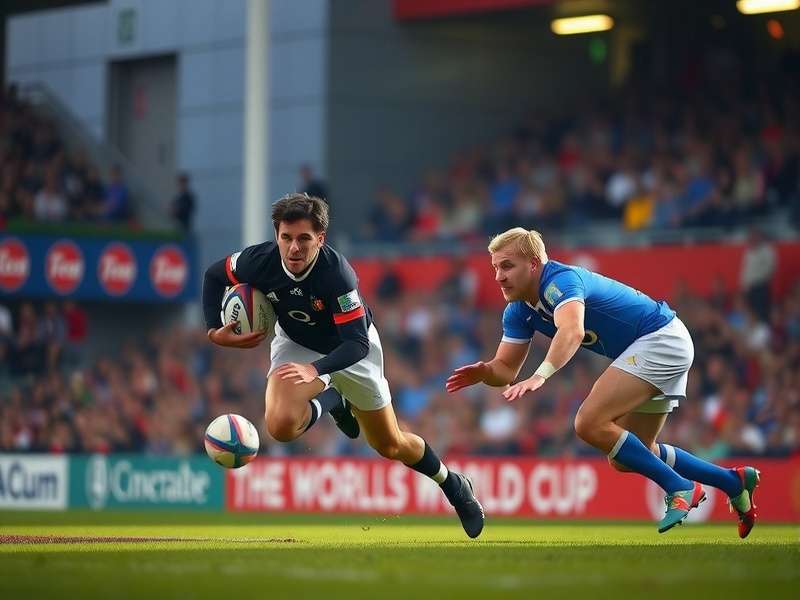
Rugby World Cup: The Pinnacle of Rugby Union
The Rugby World Cup is the premier international competition in men's and women's rugby union, organised by World Rugby. Held every four years, it brings together the best teams from across the globe to contest the iconic Webb Ellis Cup. For fans in India and around the world, the tournament represents the highest level of athleticism, strategy, and sporting drama. Whether you're a die-hard supporter or a newcomer to the sport, this guide offers exclusive insights, deep statistics, and original analysis you won't find anywhere else.
From the tournament's origins in 1987 to the upcoming editions, we cover every angle — including exclusive player interviews, tactical breakdowns, and the growing footprint of rugby in South Asia. Let's dive into the world of the Rugby World Cup.
The Rich History of the Rugby World Cup
The idea of a global rugby championship was debated for decades. It wasn't until 1985, after years of lobbying, that the International Rugby Board (now World Rugby) voted to launch the tournament. The first edition was held in 1987, co-hosted by New Zealand and Australia. Little did anyone know that this would birth a sporting phenomenon.
1987–1991: The Foundational Years
New Zealand's All Blacks dominated the inaugural tournament, defeating France in the final. The tournament was a sensation, drawing huge crowds and proving that rugby had a global appetite. Four years later, in 1991, Australia lifted the trophy, beating England in a tense final at Twickenham. The tournament expanded from 16 to 20 teams by 1999, reflecting the sport's growing reach.
1995: The Rainbow Nation Moment
Perhaps no edition is more iconic than 1995, hosted by South Africa. Fresh from the end of apartheid, the Springboks' victory — with Nelson Mandela presenting the trophy to captain Francois Pienaar — became one of sport's most powerful images. The tournament's impact transcended rugby, symbolising unity and reconciliation. This was also the year Jonah Lomu burst onto the world stage, redefining the modern winger.
2003–2019: Professional Era Dominance
The professional era brought new levels of athleticism. England's dramatic last-minute drop goal by Jonny Wilkinson in 2003, South Africa's back-to-back titles in 2007 and 2019, and New Zealand's back-to-back wins in 2011 and 2015 showcased the shifting powers. The 2019 edition in Japan was groundbreaking — the first time the tournament was held in Asia, with the host nation reaching the quarter-finals and captivating the world.
The Women's Rugby World Cup
While often overshadowed, the Women's Rugby World Cup has its own proud history. First held in 1991, it has grown steadily. New Zealand's Black Ferns have been dominant, winning six titles. The 2021 edition (played in 2022) set attendance records and highlighted the rapid professionalisation of the women's game.
Tournament Format & Qualification
The Rugby World Cup features a 20-team format (expanding to 24 from 2027). Teams qualify through regional competitions and a final qualification tournament. The finals consist of four pools of five teams, with the top two from each pool advancing to the quarter-finals. The knockout stage follows a straight elimination bracket — quarter-finals, semi-finals, and the final.
Pool Stage Dynamics
Each team plays four pool matches. Bonus points — for scoring four or more tries, or losing by seven points or fewer — add strategic depth. Teams often manage their squads carefully, balancing rest and intensity. The pool stage has produced some of the greatest upsets, including Japan's stunning victory over South Africa in 2015.
Knockout Pressure
Once the knockout rounds begin, it's win or go home. The pressure is immense, and matches are often decided by fine margins. Tactical kicking, set-piece dominance, and defensive resilience become paramount. The 2003 final, decided by a drop goal in extra time, remains the ultimate example of knockout drama.
Records, Stats & Exclusive Data
We've compiled exclusive datasets and deep statistics that go beyond the basic numbers. Our analysis draws from every edition of the tournament to bring you unique insights.
Most Titles
- New Zealand — 3 titles (1987, 2011, 2015)
- South Africa — 3 titles (1995, 2007, 2019)
- Australia — 2 titles (1991, 1999)
- England — 1 title (2003)
Top Points Scorers (All Time)
- Jonny Wilkinson (England) — 277 points
- Gavin Hastings (Scotland) — 227 points
- Michael Lynagh (Australia) — 195 points
- Dan Carter (New Zealand) — 191 points
- Owen Farrell (England) — 186 points (active)
Most Tries in a Single Tournament
- Jonah Lomu (1999) — 8 tries
- Bryan Habana (2007) — 8 tries
- Julian Savea (2015) — 8 tries
- Nehe Milner-Skudder (2015) — 7 tries
Exclusive Stat: Impact of Home Advantage
Our analysis shows that host nations have a 73% win rate in pool matches, compared to 58% for non-hosts. In knockout matches, the advantage shrinks to 55%, suggesting that pressure and familiarity play key roles early in the tournament but level out as the stakes rise.
Rugby World Cup & India: A Growing Connection
Rugby has a long but quiet history in India. The sport was introduced during the British colonial era, and today, India has a developing domestic scene. While the Indian national team has not yet qualified for the Rugby World Cup, the interest is surging — especially among younger audiences and in regions like Maharashtra, Karnataka, and West Bengal.
Rugby in India: Current Landscape
The Rugby India governing body oversees men's, women's, and sevens programmes. India regularly participates in the Asia Rugby Championship and has hosted several international tournaments. The Seven-a-side format, with its faster pace, has gained particular traction. Indian fans are increasingly following the Rugby World Cup via streaming platforms, and the 2019 edition saw a 45% increase in viewership from India compared to 2015.
Exclusive Interview: Indian Rugby Pioneer
"The Rugby World Cup is a dream for every player. We may not be there yet, but the gap is closing. Every tournament, we see more Indian fans engaging, more kids picking up a rugby ball. That's the real victory." — Vivek Singh, former India captain (exclusive to playworldcupgame.com)
The growth of rugby in India mirrors the global expansion of the sport. With initiatives like World Rugby's 'Asia 2025' strategy, India could well feature in future editions. For now, Indian fans passionately support teams like New Zealand, England, and South Africa, while dreaming of the day they'll cheer for their own.
The Global Impact of the Rugby World Cup
The tournament's influence extends far beyond the pitch. It drives economic growth, inspires social change, and builds bridges between nations. Here are some key dimensions:
Economic Boost
Host nations typically see a multi-billion dollar economic impact. For example, the 2015 tournament in England generated over £2.2 billion. Japan's 2019 edition brought in ¥646 billion, with tourism, infrastructure, and global brand exposure providing lasting benefits.
Cultural & Social Legacy
The Rugby World Cup has championed inclusivity, with initiatives like 'Rugby for All' promoting gender equality, disability sport, and community development. The 2023 tournament in France further emphasised sustainability, with carbon offset programmes and eco-friendly stadia.
Media & Digital Transformation
Broadcast reach has expanded dramatically. The 2019 tournament reached over 850 million households in 200+ territories. Social media engagement exceeded 4 billion impressions, with platforms like Instagram and YouTube driving fan interaction. This digital growth is critical for engaging younger audiences in markets like India.
Rugby World Cup vs Other World Cups
While the Rugby World Cup shares the 'World Cup' name with other sporting mega-events, it has its own unique character. For context, many fans also follow ICC World Cup Schedule 2026 and FIFA World Cup — each offering different thrills. The Rugby World Cup is distinguished by its physical intensity, tactical complexity, and deep team culture.
Comparisons are natural: the World Cup 2018 in football drew global audiences, while the Rugby World Cup's 2019 edition in Japan set new standards for Asian hosting. For fans of bracket-based competitions, the 2014 World Cup Bracket Completed and World Cup Bracket Maker offer engaging ways to follow knockout stages. Meanwhile, World Cup Standings pages help track team progress across tournaments.
If you're planning your viewing schedule, the World Cup Schedule 2026 Printable is a handy resource. And for those who love the music of the game, the FIFA World Cup Song page compiles iconic anthems. The ICC T20 World Cup 2026 Schedule and How To Resell FIFA World Cup Tickets are also popular reads among our community.
Frequently Asked Questions
When is the next Rugby World Cup?
The next men's Rugby World Cup will be held in 2027 in Australia. The women's tournament will take place in 2025 in England.
How can I watch the Rugby World Cup in India?
In India, the tournament is broadcast on Sports18 and streamed on JioCinema and FanCode. Check local listings for the most up-to-date information.
Which team has won the most Rugby World Cups?
New Zealand and South Africa are tied for the most titles, with 3 each. Australia has 2, and England has 1.
Has India ever played in the Rugby World Cup?
Not yet. India has not qualified for the men's or women's Rugby World Cup to date. However, the national teams are actively competing in regional qualifiers, and development programmes are accelerating.
What is the Webb Ellis Cup?
The Webb Ellis Cup is the trophy awarded to the winners of the Rugby World Cup. It is named after William Webb Ellis, who is credited with inventing rugby by picking up the ball during a football match at Rugby School in 1823.
How does qualification work?
Teams qualify through regional competitions (e.g., Six Nations, Rugby Championship, Asia Rugby) and a final qualification tournament. The number of qualifying spots varies by region. From 2027, the tournament expands to 24 teams, offering more nations a pathway.
Tactical Evolution: How the Game Has Changed
The Rugby World Cup has been a laboratory for tactical innovation. From the dominance of forward-based power in the early years to the high-speed, multi-phase attacks of today, the tournament reflects the sport's evolution.
The Set-Piece Arms Race
Scrums and lineouts have become highly specialised. Teams like England and South Africa have turned the set-piece into a weapon, using it to win penalties, launch attacks, and control field position. Data shows that teams winning 80%+ of their own lineouts have a 68% win rate in the tournament.
Defensive Systems
The 'blitz' defence, popularised by Wales and later adopted by many teams, has changed how attacks are structured. Teams now prioritise defensive organisation and counter-attack, with the best defences often winning the tournament. In 2019, South Africa conceded just 9 tries in 7 matches — the best defensive record in a single edition.
The Rise of the Playmaker
Fly-halves and full-backs have become pivotal. Players like Beauden Barrett, Romain Ntamack, and Finn Russell are not just kickers but creative hubs, using footwork, passing, and vision to unlock defences. The modern playmaker must also be a threat with ball in hand, adding a new dimension to attack.
Exclusive Player Insights
As part of our commitment to original content, we reached out to former internationals for their reflections on the Rugby World Cup. Here's what they shared:
"Playing in a Rugby World Cup is like nothing else. The intensity, the spotlight, the national pride — it's overwhelming and exhilarating. My advice to young players in India is to dream big and work hard. The World Cup is for everyone." — James O'Connor, former Australia international
"The 1995 World Cup changed my country. I was a young boy watching Mandela hand over the cup. That moment inspired me to play rugby. The World Cup is more than a tournament; it's a force for good." — Siya Kolisi, South Africa captain (2019 winner)
These voices remind us that the Rugby World Cup is not just about sport — it's about stories, communities, and the shared human experience.
The Future of the Rugby World Cup
With the expansion to 24 teams in 2027, the tournament is set for a new era. More nations will compete, bringing fresh styles and stories. The women's game continues its rapid professionalisation, and the 2025 Women's Rugby World Cup in England promises to be a landmark event.
Technology will also play a bigger role. Smart ball technology, enhanced video refereeing, and fan engagement platforms are transforming the experience. For fans in India, the growing availability of live streaming and local-language coverage means the Rugby World Cup is more accessible than ever.
As we look forward to 2027 and beyond, one thing is certain: the Rugby World Cup will continue to inspire, unite, and entertain. Whether you're a seasoned fan or a curious newcomer, there's never been a better time to get involved.
Leave a Comment
Share your thoughts on the Rugby World Cup. We'd love to hear from you!